
Minsk factory’s hidden role in building Russia’s war drones
Amid the war in Ukraine, the Belarusian company KB Unmanned Helicopters has delivered around three dozen unmanned helicopters to Russia. This is evidenced by customs data available to Buro.
According to the documents, Kumertau Aviation Production Enterprise (KUMAPP) in Bashkortostan was the recipient of the Belarusian equipment. It is part of the Rostec state corporation, which is under Western sanctions due to its involvement in the war. The Bashkortostan plant has started producing unmanned helicopters with the assistance of KB Unmanned Helicopters.
Belarusian design engineers had also planned to assemble attack drones in Russia for the purpose of guarding the Crimean Bridge. However, the project did not receive support.
“BROTHERLY” DRONES
The unmanned helicopter system BAS-200 was created based on the Belarusian unmanned helicopter Eye Sky, and is now being mass-produced in Bashkortostan. The BAS-200 was tested and received flight authorisation in 2022. KB Unmanned Helicopters then supplied KUMAPP with 28 unmanned helicopters, 10 remote piloting stations and shipping containers, customs records show. The total value of the equipment exceeds $16 million.
“We sold the technology to the Russians and took part in certifying [the BAS-200] under general civil aviation rules. Then they asked for a large number of [assembly] kits to be made for them. We dispatched all the components to Kumertau, where they were then assembled and put into operation. Then we washed our hands of it”, said Vladimir Chudakov, founder and chief designer of KB Unmanned Helicopters, in an interview with Buro.
The BAS-200 can travel at speeds of up to 160 km/h and transport cargo weighing up to 50 kg by air. The device can remain airborne for up to four hours at altitudes of up to 3,500 metres.
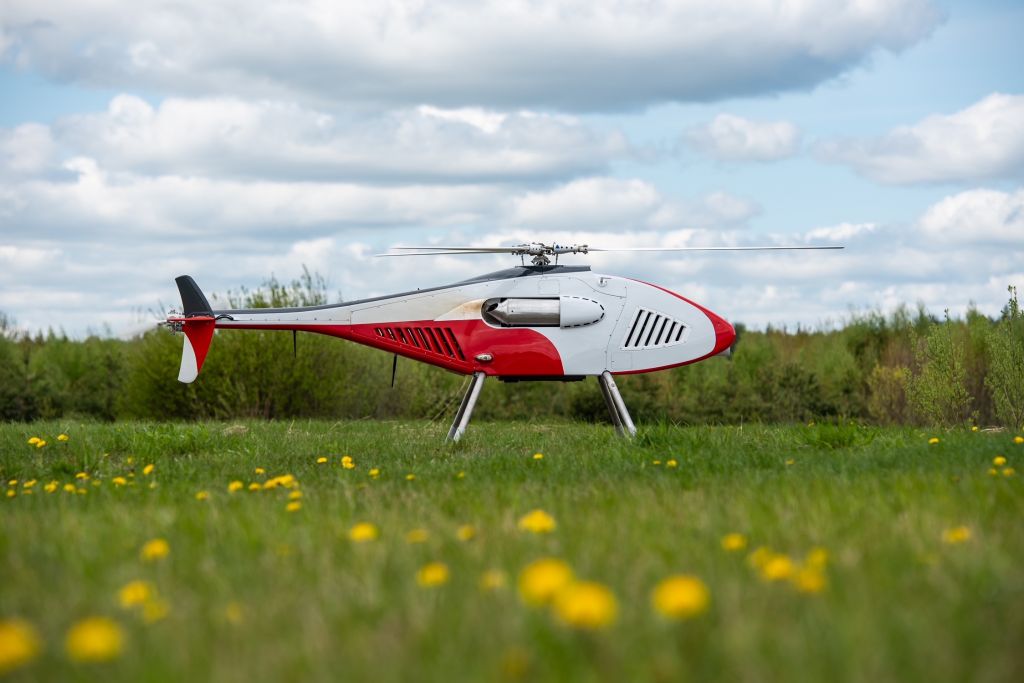
BAS-200. Source: rostec.ru
In August 2023, Sergei Chemezov – the head of Rostec Corporation – informed Vladimir Putin that the BAS-200 would be deployed in the war against Ukraine. He said that the drones performed well during the tests.
At the Army-2022 exhibition a year earlier, Chemezov presented another novelty: the BAS-750 unmanned system. It is a successor to the Hunter reconnaissance and strike drone, another development by KB Unmanned Helicopters.
“This machine was built as a military vehicle, so there is no civilian application for this particular complex”, Vladimir Chudakov said earlier.
The BAS-750 can airlift cargo weighing up to 200 kg at speeds of up to 180 km/h. The drone can remain airborne for up to six hours at altitudes of up to 3,500 metres.
“The BAS-750 is the older brother of the BAS-200 drone. It continues the line of multifunctional unmanned systems capable of solving a wide range of problems”, said Oleg Yevtushenko, Rostec’s executive director.
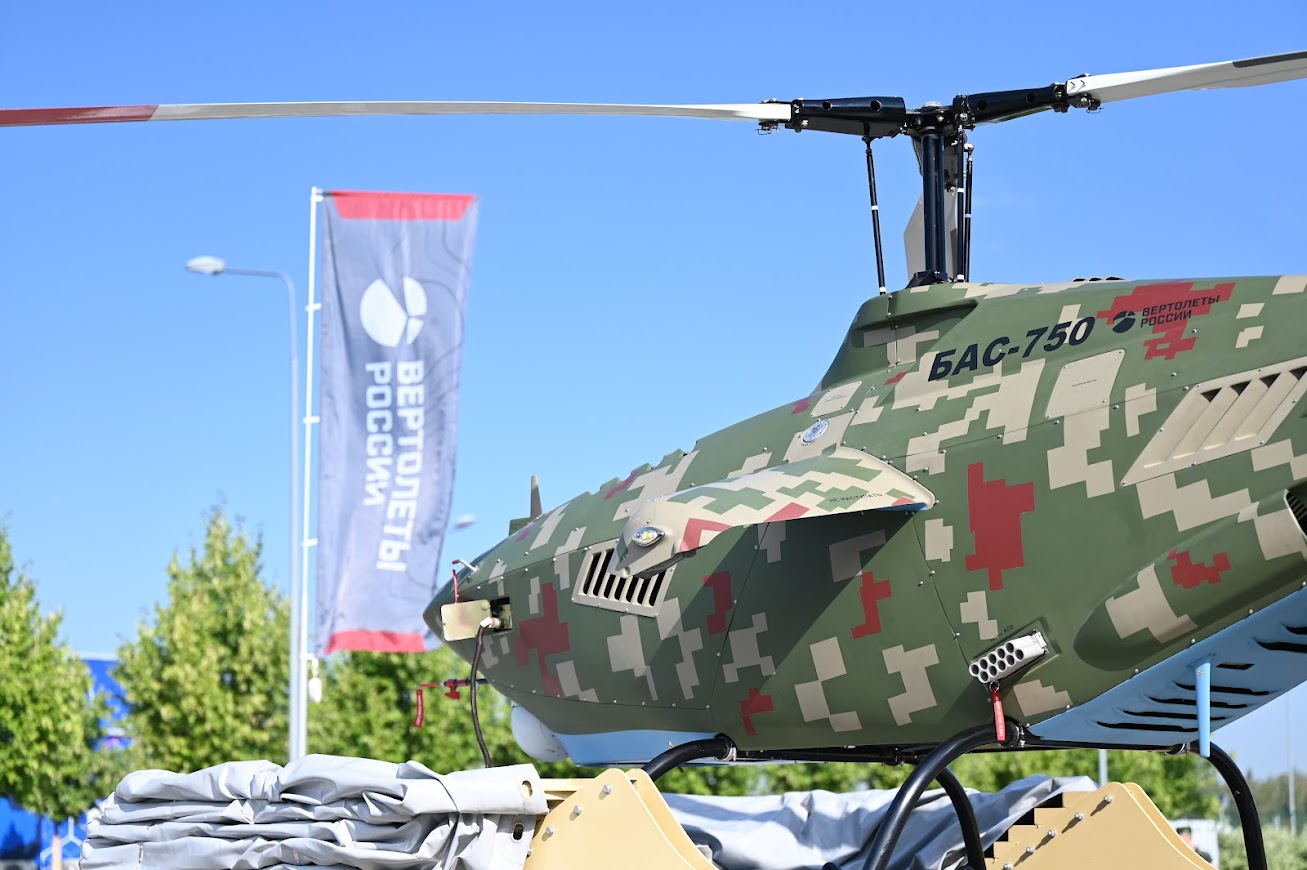
BAS-750. Source: rostec.ru
The government of Bashkortostan signed a cooperation agreement with KB Unmanned Helicopters in June 2023. The agreement was for the production of the BAS-750 in Russia. Chudakov informed Buro that there is currently no cooperation between the countries concerning this unmanned system.
CRIMEAN PROJECT
Denis Fedutinov, a Russian expert in unmanned aviation, says that unmanned helicopters of Belarusian design can be used by the navy, based on shore and on ships. He claims that the BAS-200 is suitable for reconnaissance and surveillance, while the BAS-750 can also perform strike missions. For example, it could be used to carry dropable hydroacoustic buoys for effective anti-submarine defence or against uncrewed boats.
“I assume that the BAS-750 devices can be paired with the BAS-200 lighters. The latter can launch strike Hunter helicopters at identified targets”, Fedutinov told Buro.
KB Unmanned Helicopters attempted to realise a similar project in Russia. We found links to influential businessmen from Putin’s entourage in it.
There is a company called Bars in Podolsk, near Moscow. KB Unmanned Helicopters owns 45% of this firm. Another 10% is owned by Belarusian businessman Uladzimir Yaprintsau. Russian entrepreneur Aleksandr Gurtovenko owns the remaining 45%. Buro has learned that he used to be the CEO of Riolis, the company behind the popular Moscow restaurant Gusyatnikoff, which has links to the Russian billionaires Rotenberg.
At the end of 2023, KB Unmanned Helicopters had provided Bars with drilling machines, band saws, lathes, soldering stations, wiring tables and workbenches, as well as other tools. The Podolsk company wanted to build drones to protect the Crimean Bridge, which Ukrainian security services had blown up several times. Incidentally, the bridge was built by a company associated with Arkady Rotenberg.
«“Our plan was to initiate the CKD assembly of Hunter unmanned helicopters [at the Bars facility]. They wanted to use them to guard the Crimean Bridge, but nobody cared. There were no orders”, said Vladimir Chudakov of KB Unmanned Helicopters.
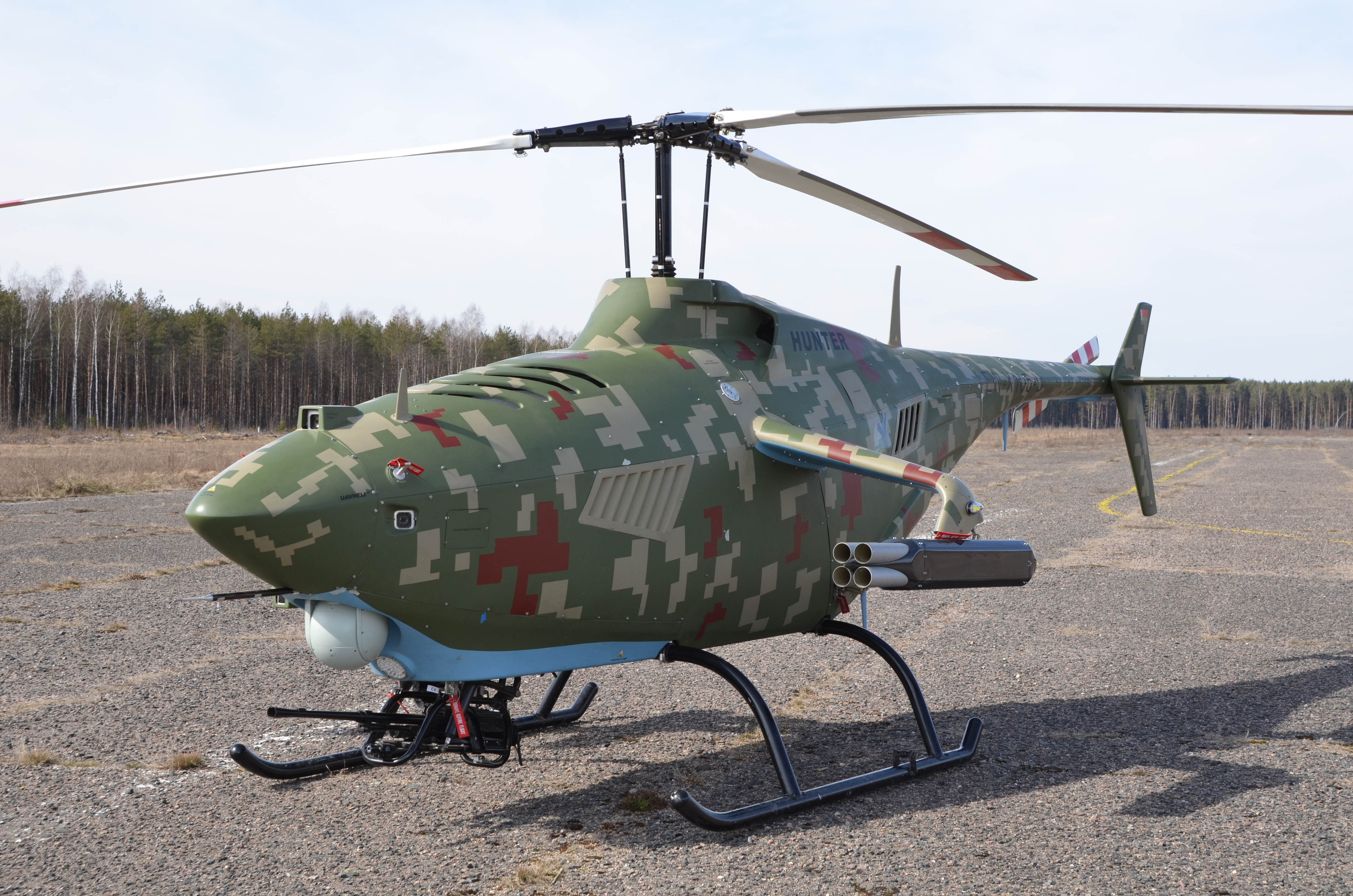
Hunter. Source: uavheli.by
Since 9 August 2024, KB Unmanned Helicopters has been subject to US sanctions “for operating or having operated in the defence and related materiel sector of the Belarus economy”.
GRAND MASTER PLANS
KB Unmanned Helicopters has significantly improved its financial performance in cooperation with Russian partners. In 2024, the Belarus-based company’s revenue tripled to $16 million, and its net profit increased by 36% to $4.7 million.
The company now employs 120 people. The Minsk enterprise developed the Mirotvorets and Askalon drones, commissioned by the State Military-Industrial Committee of Belarus. They are “supplied to security agencies in other countries”. Last September, during his visit to the Abuz-Liasnaya Firing Range, Aleksandr Lukashenko was shown the combat drones.
Chudakov told Buro that KB Unmanned Helicopters had transferred the technology for producing the Mirotvorets and Askalon drones to another Belarus-based company, Bespilotnye Letatelnye Apparaty. He claims to have a “small share” in this company. The businessman declined to disclose his partners in the project.
According to BelPol, an association of former law enforcers, the work of Bespilotnye Letatelnye Apparaty is supervised by Vector Capital Group, which is associated with Viktar Sheiman, a long-standing and loyal associate of Aleksandr Lukashenko.
In 2025, Bespilotnye Letatelnye Apparaty planned to produce 720 Mirotvorets and 240 Askalon drones and earn $76.2 million from their sales. BelPol believes that the Minsk company is working “in the interests of both Lukashenko’s dictatorship and the Russian military”.