
Lukashenko’s “oil wallet” strikes gold again with a billion-dollar business
A new player has entered the Belarusian market for petroleum products: Mineral Goods Trade. The business launch was not publicised anywhere. Remarkably, the company achieved revenue exceeding $1 billion after just two years in business. Buro discovered that the new firm is linked to the influential businessman Mikalai Varabei.
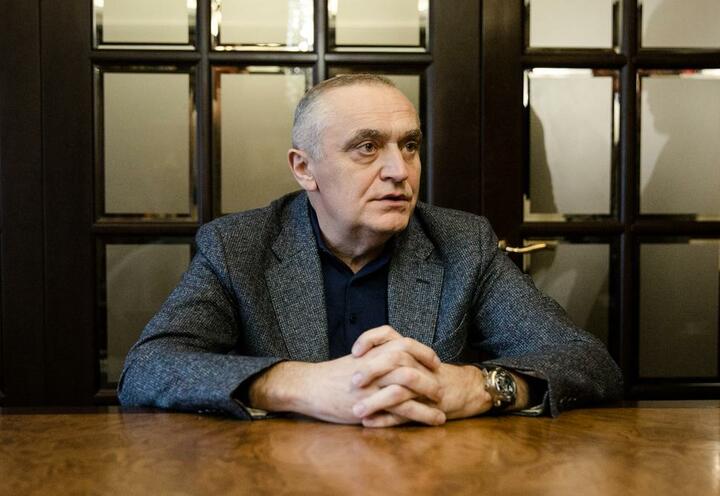
Mikalai Varabei. Source: tut.by
Since the sanctions were imposed, the businessman has been operating through new companies registered in the names of trusted individuals. One such company is Mineral Goods Trade (MGT). It was founded in Navapolatsk in December 2022. Varabei began his business career in this town.
MGT owns the Krasny Bor tourist complex, located in the Verkhniadzvinsk District. Interservice, a company controlled by Varabei, managed the resort before the sanctions were imposed. The tourism and dining operations, including a café and bar in Dabrapliosy, a tavern in Asveya, and a pub in Izubrytsa, have been transferred from the sanctioned company, Interservice, to MGT. The Krasny Bor website and its trademark are also registered with the MGT.
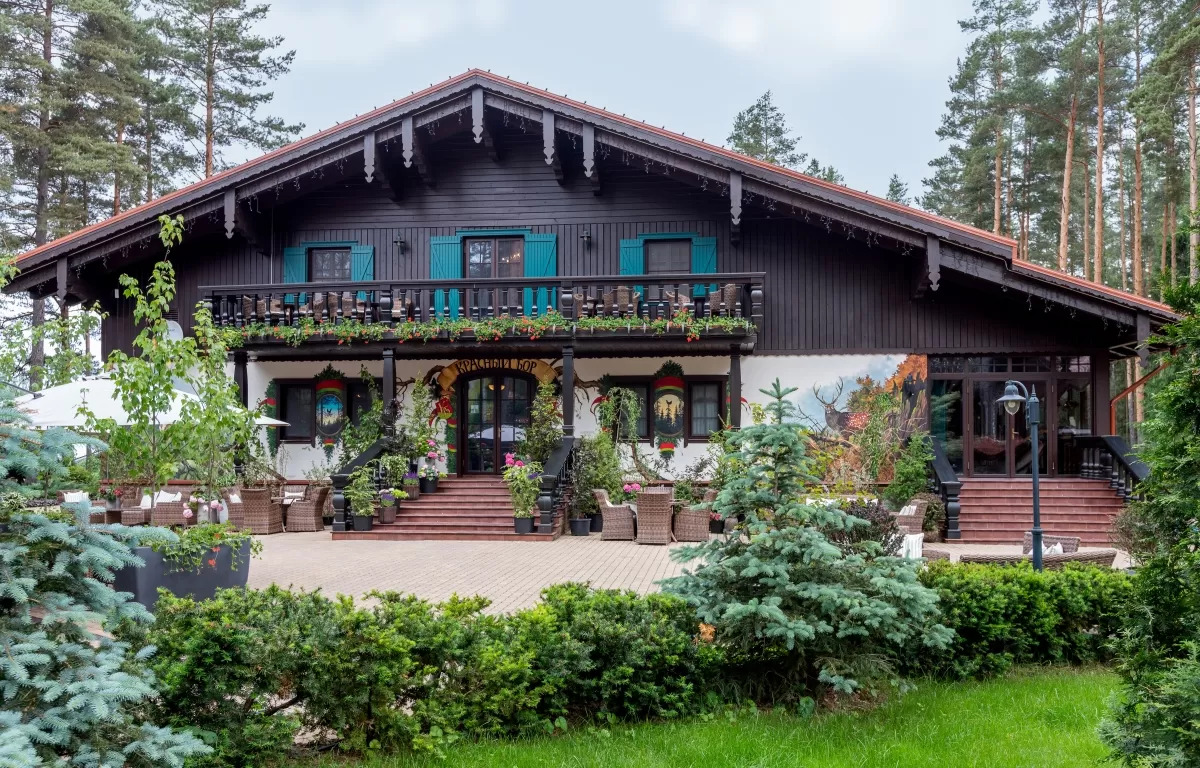
The Krasny Bor Tourist Complex. Source: krasniybor.by
Andrei Shyshko, who has experience in the oil trade and logistics, is the head of MGT. Thanks to the CyberPartisans, we found out that he began working for Varabei in 2021. He started his career at Novaya Neftyanaya Kompaniya and subsequently joined Landresource. He has been the head of Mineral Goods Trade since June 2023. Kiryl Bialiayeu is the owner of MGT. A native of Navapolatsk, he has worked at Vitebskenergo his entire life. During his conversation with Buro, Bialiayeu could not explain how he ended up at MGT.
The primary business activity of Mineral Goods Trade is the wholesale trade of furnace fuel oil. Two years after its registration, MGT experienced phenomenal success. By the end of 2024, the company’s revenue had exceeded 3.5 billion Belarusian rubles, and its net income was 51 million rubles. Few Belarusian companies can boast such figures.
Last year, MGT’s financial results were more modest. Revenue dropped by almost 80%, falling to 715 million rubles. Net income decreased by almost 2%, reaching 50 million rubles.
Andrei Shyshko, the head of MGT, declined to comment.
After European sanctions were imposed, Belarus lost important transportation routes for petroleum products through the Baltic States. As a result, Belarusian petroleum products were exported through Russian ports. As we previously reported, Logistic Energy, a company associated with Varabei, transported gasoline, diesel fuel, fuel oil, and gas oil to ports in the Leningrad Region. By the end of 2024, it had accounted for nearly one-quarter of all petroleum product rail shipments from Belarus to Russia, with more than 19,000 tank cars carrying over 1.2 million metric tons.
Petroleum products from Belarus are shipped from Russian ports to other countries. For example, India or China, an oil trader told Buro. He claims that straw companies are used to get around sanctions.