
Lost the battle, kept the market: A Czech billionaire’s Belarus plumbing trade
František Fabičovic, a Czech billionaire, has a functioning business in Belarus. This is despite his previous claims that the company lost the Belarusian market due to the war in Ukraine. Together with the Czech publication Voxpot, Buro investigated the situation.
František Fabičovic is one of the wealthiest people in the Czech Republic. He and his wife, Radka Prokopová, manufacture plumbing fixtures together under the Alca brand. Their wealth is estimated at 10.4 billion Czech korunas, which is over 400 million euros.
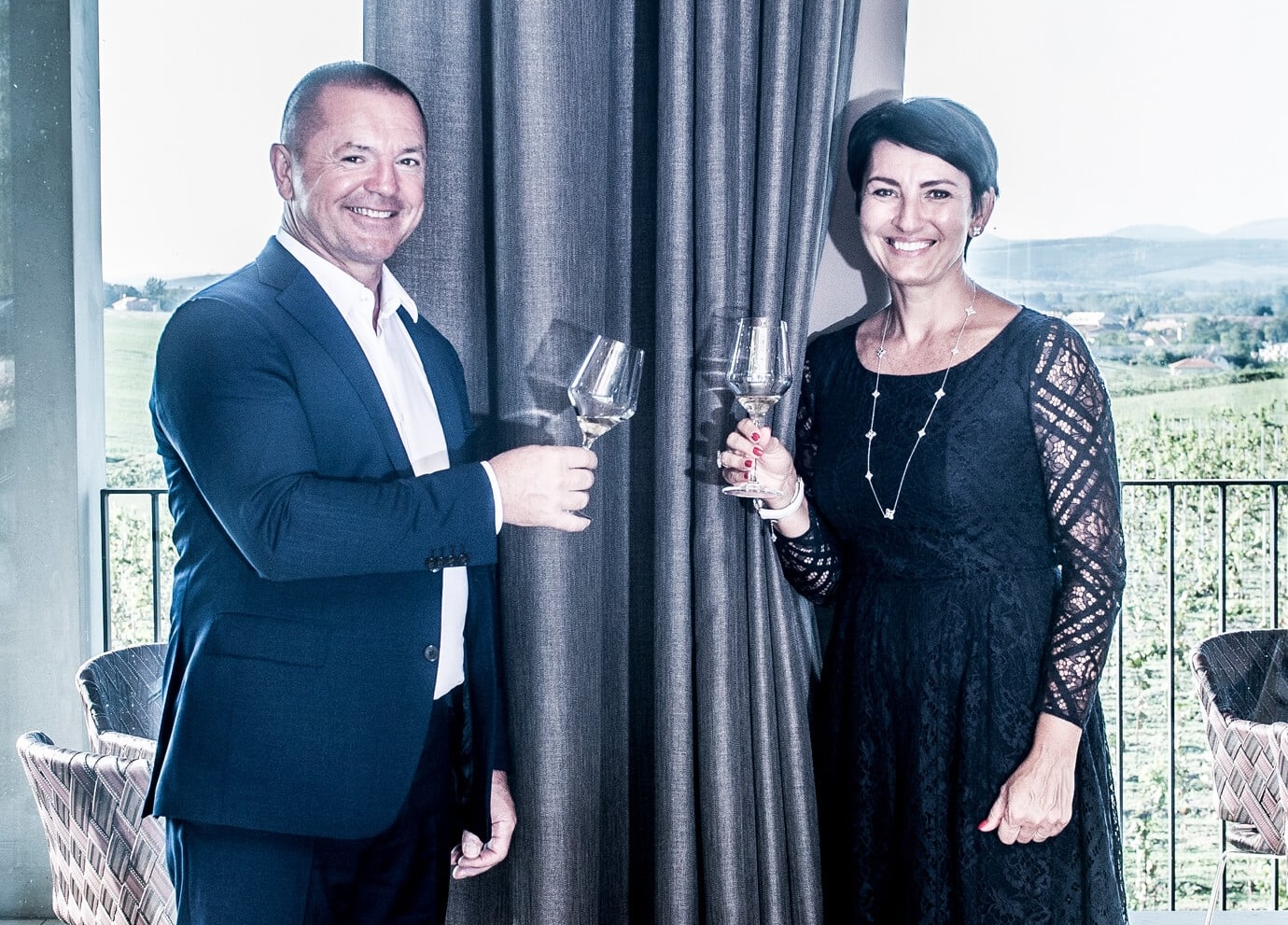
František Fabičovic and Radka Prokopová. Source: forbes.cz
In 2014, Czech entrepreneurs started a business in Belarus. The company was called AlcaPlast. It supplied plumbing fixtures for Lukashenko’s administration, Dynamo Stadium, the National Library, Minsk’s Central Railway Station, Minsk National Airport, and BelAZ. In 2017, Fabičovic visited Belarus and received an award from one of his partners, the company Keramin.
“The Russian invasion and war cost us three important markets – Russia, Belarus, and Ukraine – especially at a time when we were still dealing with supply chain disruptions from the pandemic,” Fabičovic told Forbes magazine last July.
However, Buro discovered through its partnership with Voxpot that the Czech billionaire has not halted his business operations in Russia or Belarus. Four months after the start of the full-scale war, AlcaPlast was renamed Alcadrain Bel. In November 2023, František Fabičovic took over as the sole owner of the company.
A spokesperson for the Czech businessman told Voxpot that Fabičovic’s remarks referred to the loss of Russia and Belarus as active, promising sales markets.
“That didn’t mean local legal entities ceased to exist immediately,” noted a marketing specialist at the Czech company Alcadrain.
She said that the current nominal operations of Russian and Belarusian companies are primarily related to managing their remaining assets. Local laws prevent the companies from being sold or shut down.
“Currently, these entities are not engaged in regular commercial activities and do not generate revenue,” Fabičovic’s spokesperson emphasised.
However, some of our findings suggest otherwise. Despite the war, Alcadrain Bel continued to obtain certifications for Czech plumbing fixtures so that they could be legally imported and sold in Belarus. Although Alcadrain Bel ended 2024 with a loss, its revenue grew steadily, reaching 30 million rubles by year-end. In 2025, the company posted a small profit, but its revenue plummeted by 75%, dropping to 7.6 million Belarusian rubles.
“This legal entity [Alcadrain Bel] is managed by a local director, and our influence over its day-to-day operations is limited due to local legal conditions,” said the spokesperson for Fabičovic.
The Czech businessman found himself in the spotlight after donating one million korunas to the election campaign of the right-wing party Motoristé sobě (”Motorists for Themselves”). In the 2025 election, the party won 13 of the 200 parliamentary seats and joined the ruling coalition. The party’s honorary chairman, former racecar driver and entrepreneur Filip Turek, has been accused of making racist and homophobic remarks. He serves as deputy chair of the Foreign Affairs Committee in Parliament, where he parrots Russian narratives about the war in Ukraine.
Turek said the war in Ukraine was caused by NATO’s eastward expansion, the superpowers’ poor foreign policy, and ethnic factors. According to the Czech politician, if you want to make peace with Russia, you cannot call Russia an aggressor.
The Belarusian regime is described as totalitarian in the “Motorists” party’s campaign platform, and cooperation with it is deemed unacceptable. Amid the war in Ukraine, many European companies have pulled out of the Belarusian market. For now, Fabičovic is continuing to operate his business in Belarus, but he promises to wind it down and close it as soon as local legal and regulatory conditions allow.