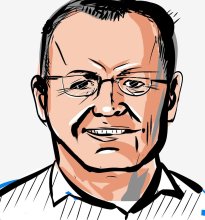
Viktor Chevtsov
Current assets: None identified.
Historical assets: Bank Reshenie/Trustbank/Infobank (banking services); Belzarubezhstroy/ViaSETrade (distribution of Belarusian equipment in Venezuela and construction in Venezuela and Belarus); Belmetallenergo/Stalinveststroy (supplying equipment and oil to and from Iraq); Tekhnokhimtrade (wholesale trade in auto parts); Golograficheskaya Industriya (manufacturing holographic products); Dudutki Museum Complex of Ancient Folk Crafts and Technologies (tourism); Future Metro Technical Contracting (engineering in the UAE); B.Z.S. Invest/RSI Middle East (construction, food and fertilizer trade, UAE), GP Holographics (manufacture of holographic products, Lithuania), PS Commodities (fruit and vegetable supply, Hungary; undergoing liquidation).
Connections: Mohammed Ahmad Alzaraim Alsuwaidi (former business partner, UAE), Alexander Gribovsky (business partner), Vital Bandaryk (manager), Alyaksandr Babareka (business partner), Mikhail Chuchkevich (business partner).
Privileges: Viktor Chevtsov served as an intermediary for the Minsk government in the Middle East and Latin America for decades.
In the 2000s, Infobank and Belmetallenergo traded with Iraq despite its being under sanctions. According to media reports, Belmetallenergo handled 90% of Belarus’s equipment shipments to Iraq and received quotas under the “Oil-for-Food” program.
Following Aleksandr Lukashenko’s rapprochement with Hugo Chávez, Chevtsov became a key participant in Belzarubezhstroy projects in Venezuela. Under intergovernmental agreements, the company built housing, infrastructure, and industrial facilities. By 2012, the value of these contracts had surpassed one billion dollars.
Chevtsov also received preferential treatment in the domestic market. His company, Tekhnokhimtrade, held a controlling stake in Golograficheskaya Industriya, which became the sole licensed manufacturer of security holograms and crystallograms in Belarus in 2011. At the same time, the government expanded the mandatory use of these products, ensuring orders for the company.
Restrictions: From 2004 to 2014, Infobank was subject to U.S. sanctions due to suspicions that it supported Saddam Hussein’s regime. In 2011, the KGB detained Chevtsov in connection with a case of embezzling $10 million from projects in Venezuela. In 2012, Chevtsov was released. He then withdrew from business in Belarus and moved to Hungary. From 2024 to 2026, he was subject to EU sanctions.