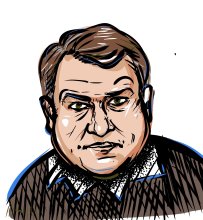
Yury Chyzh
Current assets: Triple (passenger transportation); Torgovyi Dom Prostor, ProstorKapital (retail); TriplePharm (pharmaceuticals); Danprod (meat product manufacturing).
Historical assets: TripleEnergo, Neonafta, Belneftegaz (petroleum product trading), NefteKhimTrading (gas station chain), Prostor-Trade, ProstorMarket (retail), Berezovsky Kombinat Silikatnykh Izdeliy, KvartsMelProm (production of building materials), AquaTriple (beverage production), Rakovsky Brovar (restaurant business), TripleAgro (agriculture), Triple-Veles (meat product manufacturing), Dynamo-Minsk football club (sports), Logoysk ski resort, EVO fitness club, beauty salon and spa, and Nash Rodny Kut Sabali tourist complex (recreation and tourism).
Connections: Aleksandr Lukashenko (patron), Sergey Chyzh (son), Uladzimir Chyzh (son), Tatsiana Chyzh (daughter), Sviatlana Chyzh (former wife), Natallia Nestsiarovich (manager), Uladzimir Yapryntsau (former partner), Aliaksei Aleksin (former partner), Vitold Tomaševskij (former partner).
Privileges: Yury Chyzh became part of the business elite in 2002 when his Triple group of companies gained access to the oil market. This meant he received special treatment from the Belarusian authorities. From 2011 to 2012, the businessman and his partners implemented a scheme to resell Russian petroleum products to Europe as solvents and diluents to avoid paying duties to the Russian government. The re-export scheme was carried out with Aleksandr Lukashenko's approval, and its creators raked in millions of dollars in profits.
Chyzh and his partners invested the money they earned from trading petroleum products into various projects. Some received support at the highest level. For instance, Chyzh's company, Triple, built housing for the Belarusian military in exchange for land to develop its own real estate projects. Lukashenko's decree granted the company this land without an auction, along with other tax and customs benefits. Another project involved constructing a luxury complex with a Kempinski Hotel in time for the 2014 World Hockey Championship. Lukashenko granted the developer land for the project without an auction and gave them tax and customs preferences. Furthermore, they demolished Minsk's first power plant, which was of historical and cultural significance, to make way for construction.
Yury Chyzh and his partners developed the Khatsislau deposit of silicate sands and chalk in the Malaryta District. They were granted the deposit without a bidding process, along with incentives for importing processing equipment. Triple and its partner organizations leased over 300 hectares of land in Chyzh's hometown to build the Nash Rodny Kut Sabali ethnographic complex. The government was instructed to help implement this project. Additionally, Danprod, a company associated with the Chyzh family, received preferential government loans to build a bacon-production facility in the Valozhyn District.
Many of these projects ultimately failed, causing the businessman, who had enjoyed Lukashenko's special trust, to lose his former influence and assets. This coincided with sanctions imposed on Chyzh and his subsequent detention. The businessman managed to keep ownership of Triple, selling some assets to avoid bankruptcy. While under sanctions, Chyzh transferred ownership of some of his businesses to his children. For instance, his youngest son owns TriplePharm, a factory that produces antibiotics. This is one of the few businesses that remained part of Chyzh's former empire and has consistently generated millions in profits in recent years.
Restrictions: In 2012, the European Union imposed sanctions on Yury Chyzh. The justification stated that the businessman provided financial support to the Lukashenko regime through his holding company, Triple, which was involved in many sectors of the economy, partly thanks to government contracts and privileges granted by the regime. Some of Chyzh's assets were also restricted. The businessman appealed the EU's decision. In 2015, the sanctions were lifted.
In March 2016, KGB officers arrested Chyzh on charges of tax evasion. He was released six months later after partially compensating for the damages. In March 2021, authorities arrested Chyzh again. They charged him with fraud and money laundering. The trial was held behind closed doors. In February 2023, he was sentenced to three and a half years in prison. The businessman was released from prison early due to an amnesty granted for his crime. The time he had already spent in custody was credited toward his sentence. He spent about two years behind bars.